
By Colby Palmer, Senior Intern, EACH Enterprise
Ask most people in the retirement plans sector whether diversity of the retirement plan advisor population matters, and they’ll answer with an emphatic: “YES!”. Ask them if the plan advisor population is diverse enough, and the conversation gets more convoluted.
This is not a mea culpa, but an honest observation. The question our industry should be asking isn’t just “how do we become more diverse?” It’s a sharper one: “Is the retirement advisory profession relevant to all segments of the U.S. workforce it’s supposed to serve?”
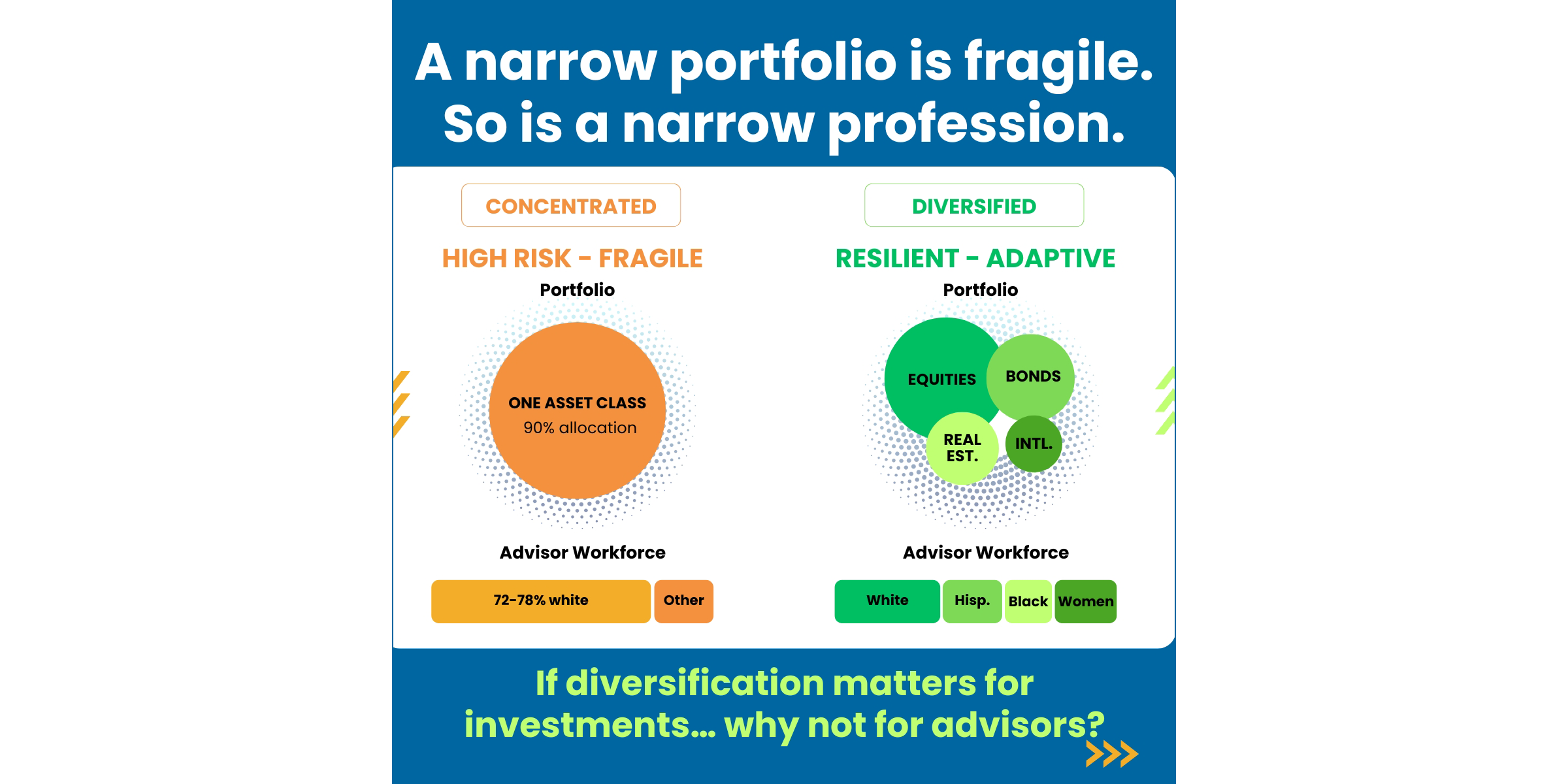
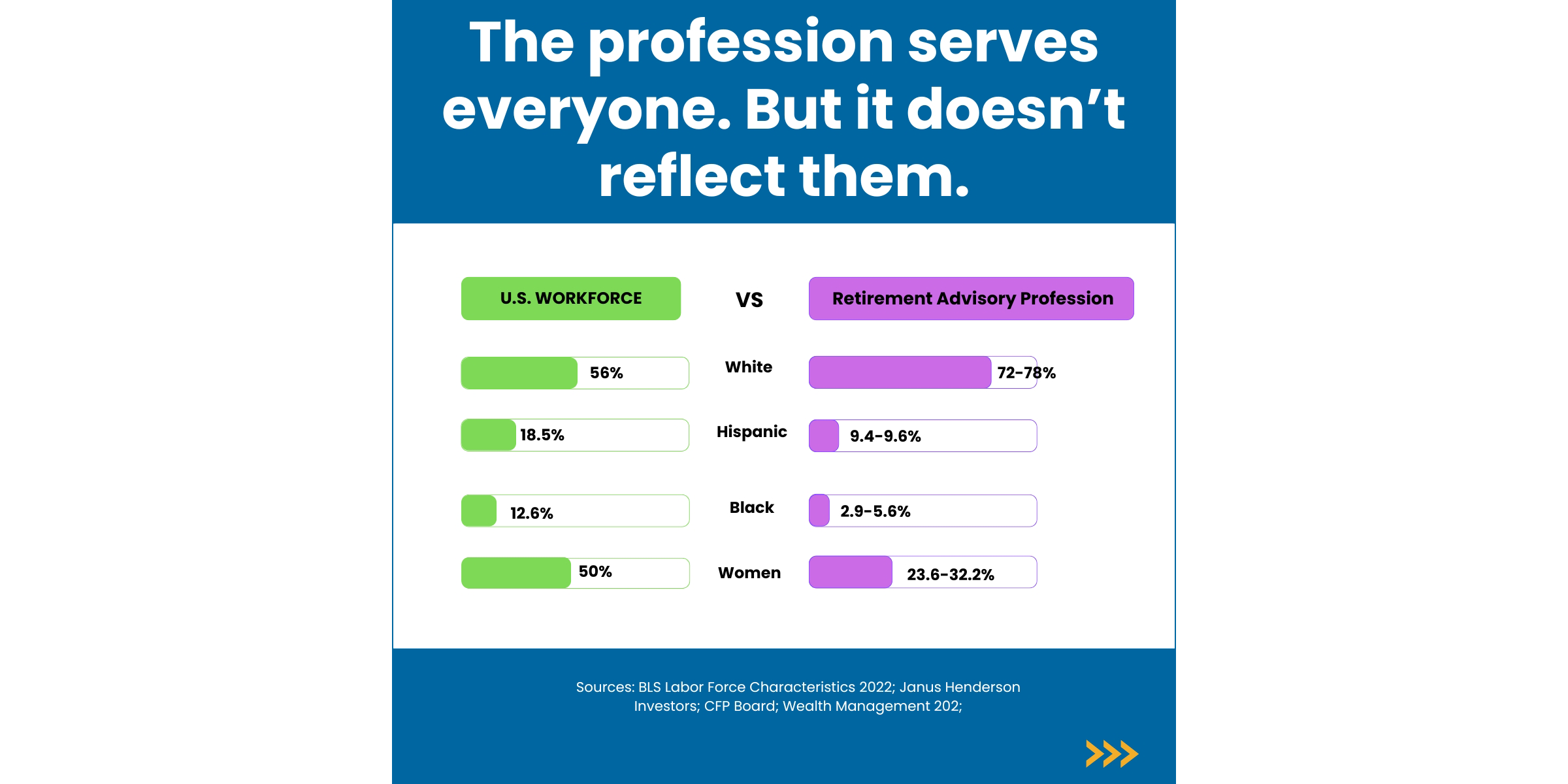
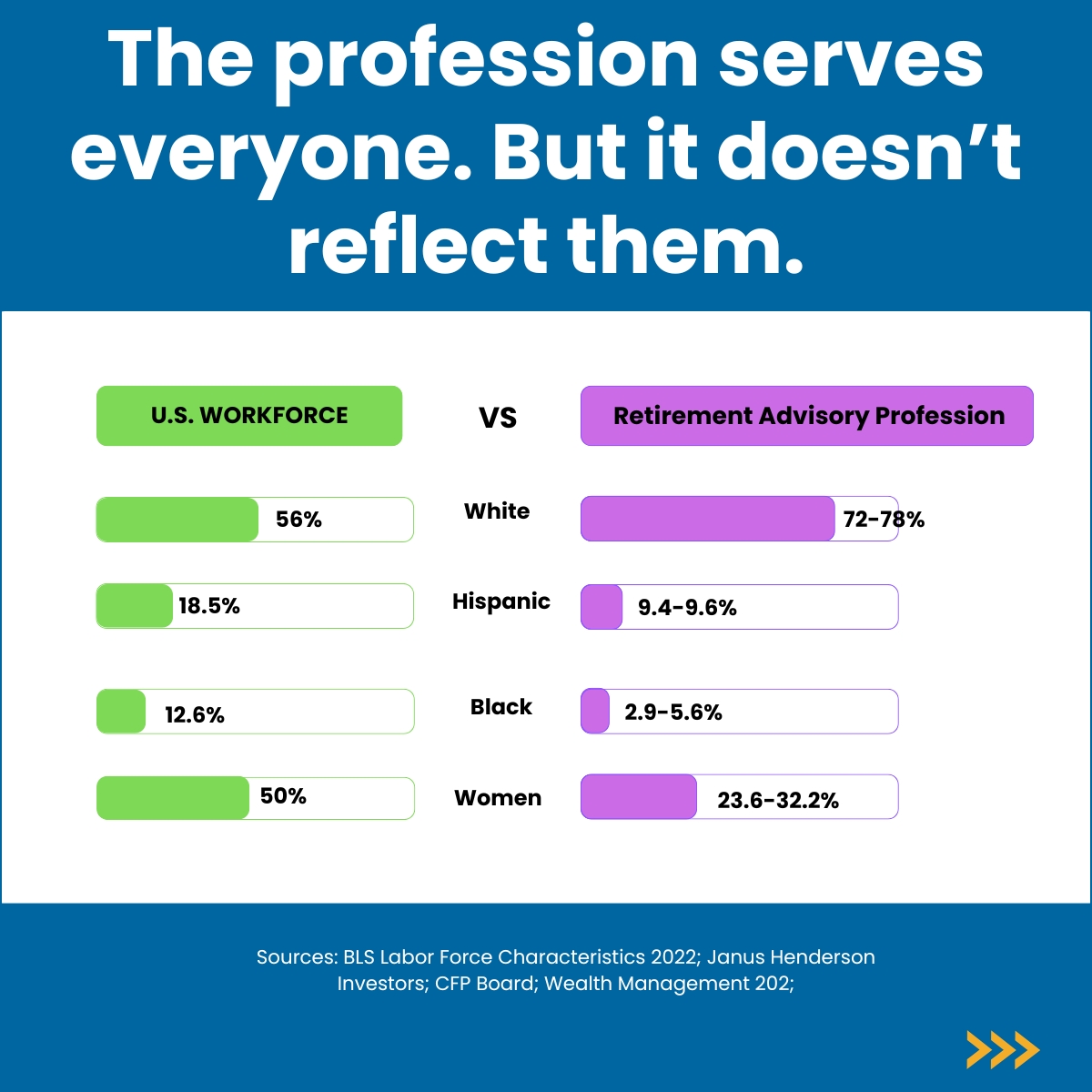
Today, the U.S. workforce is majority non-white, with Hispanic workers representing 18.5% of all employed persons and Black workers 12.6%.¹ The retirement advisory profession, by contrast, remains 72–78% white2, a gap that has persisted even as the people it serves have long reflected America’s full diversity.
Reframing the Stakes
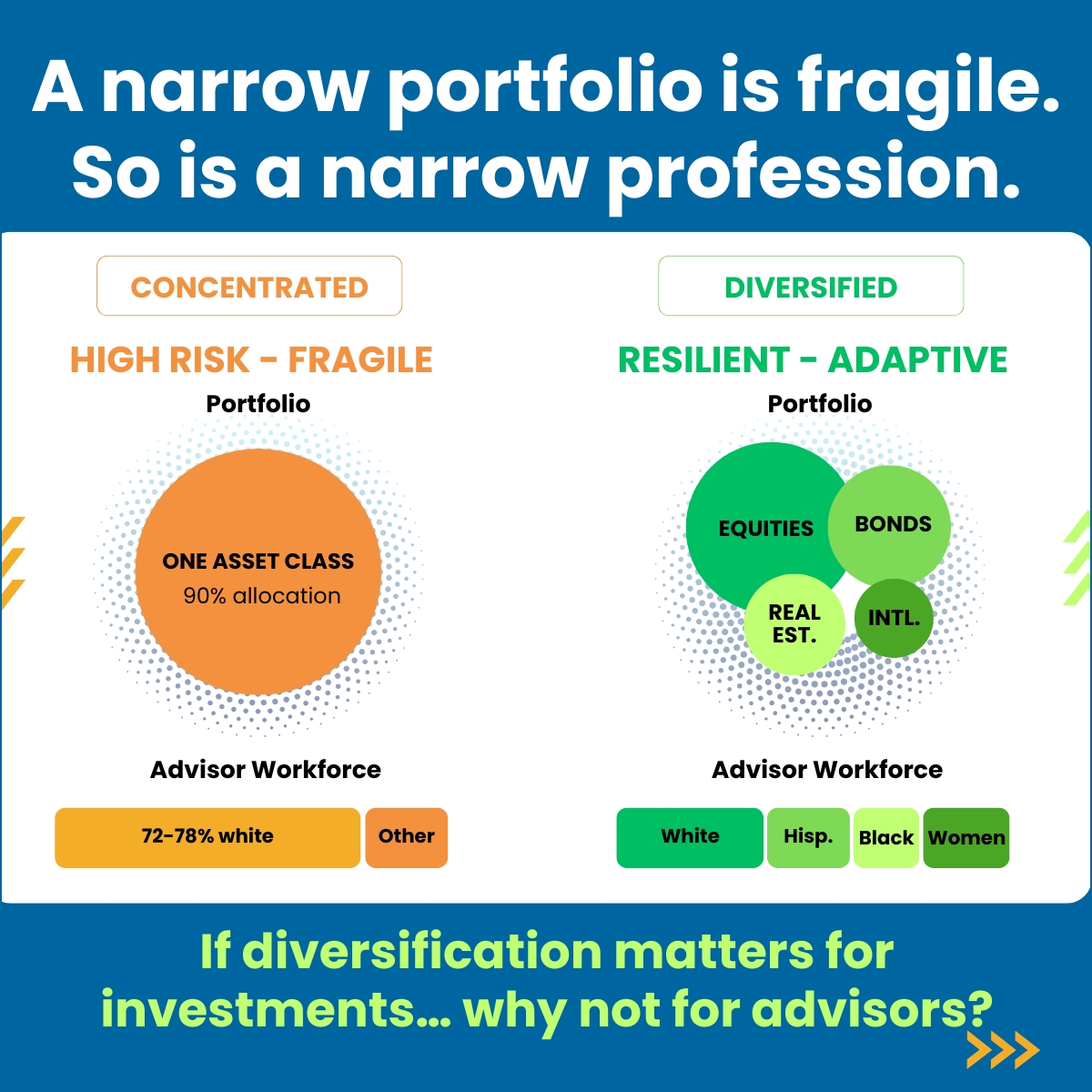
In the business, we talk a lot about the importance of diversifying a portfolio. Spread your investments across asset classes, sectors, and geographies because a narrow portfolio is a fragile one. The same logic applies to the profession that manages those portfolios. A retirement advisory workforce that draws mostly from only one slice of the population is just as exposed to risk as an undiversified fund.
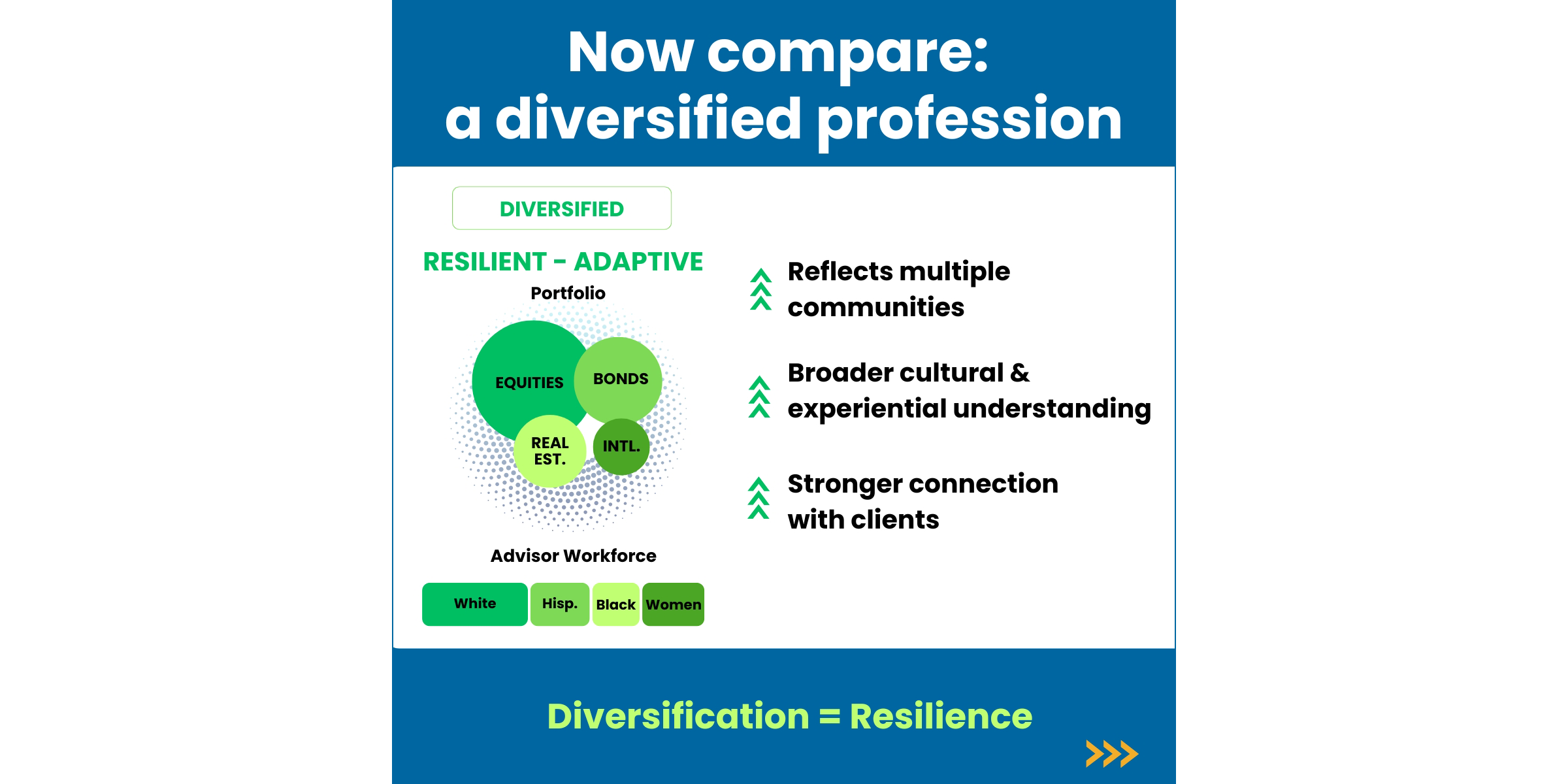
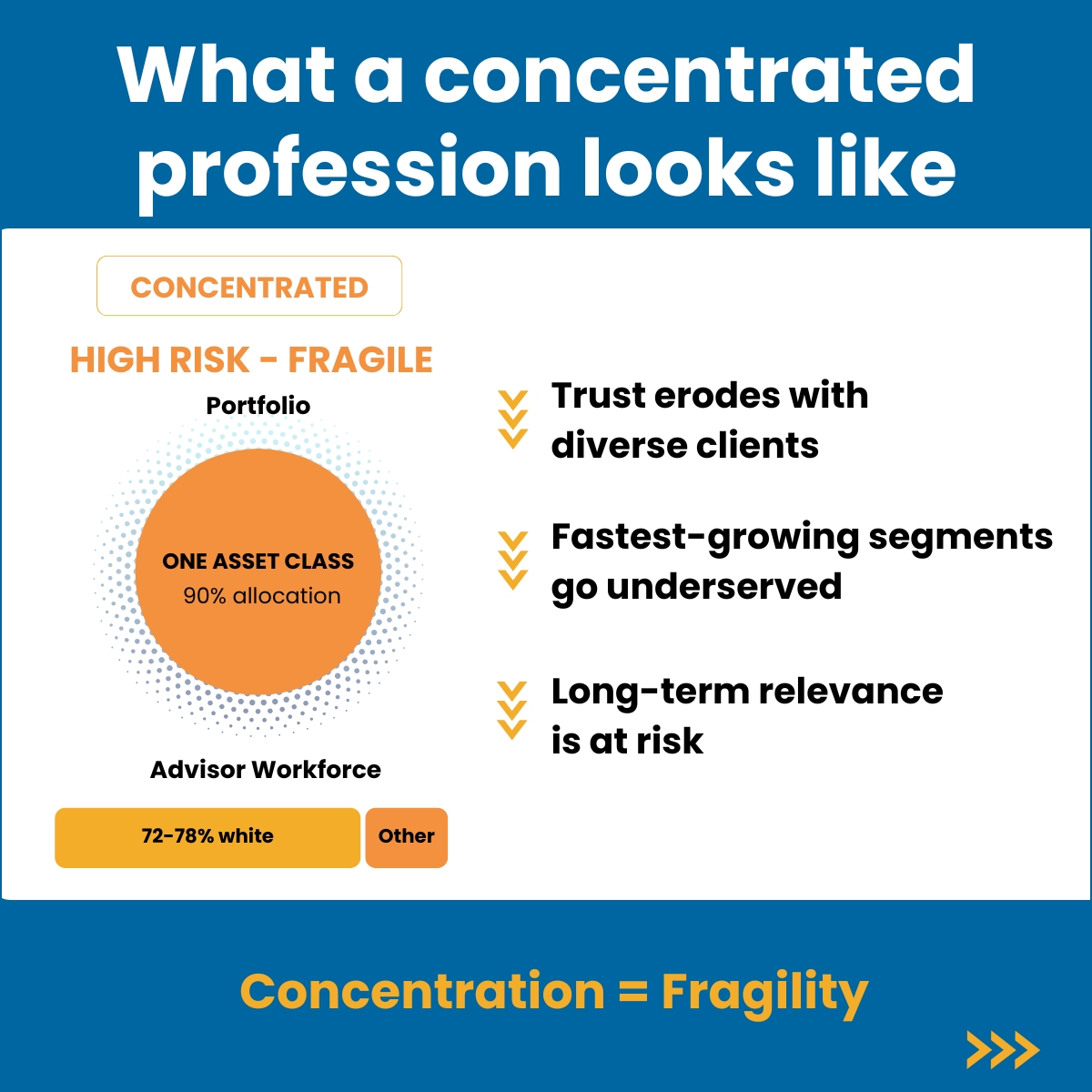
The communities least well-served by the staff of retirement plan advisory practices today are also the ones growing fastest. Hispanic workers. Black workers. Women re-entering the workforce. Younger employees who distrust institutions that don’t look like them. When the advisor population can’t speak to those communities, not just linguistically, but culturally and experientially, the trust erodes. With this, opportunities are missed, and the profession’s long-term relevance is at risk.
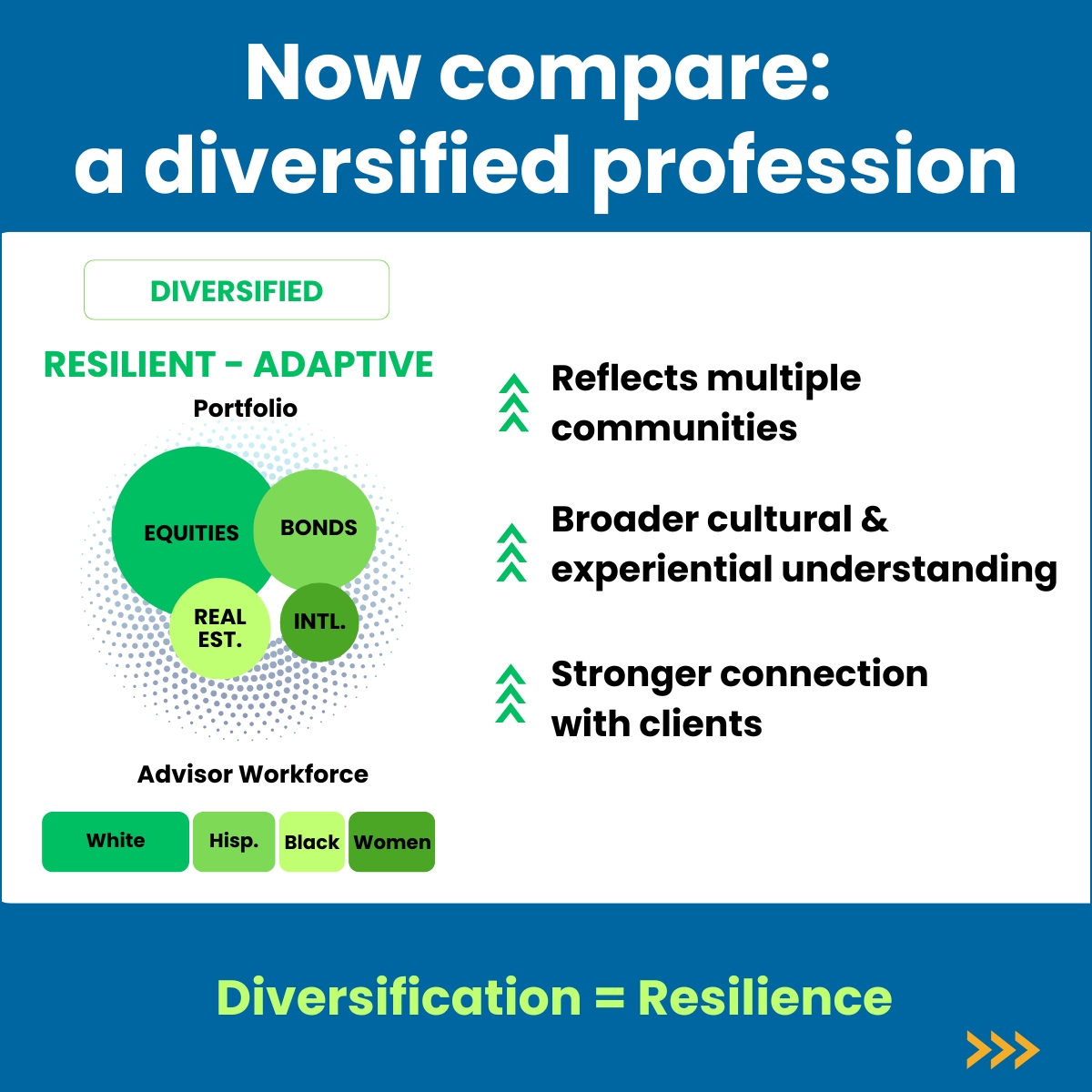
Just like a well-diversified portfolio, a well-diversified profession is more resilient, more adaptable, and better positioned for long-term growth.
The Pipeline Isn’t Where You Think It Is
When advisors think about diversifying the profession, the conversation usually turns quickly to entry-level pathways: internships, job fairs, college recruiting. Those matter. Roles like participant educators and counselors can serve as genuine on-ramps for people who might never have considered institutional retirement advising otherwise.
Organizations like Junior Achievement, FinLitFuture$, and local career fairs offer similar opportunities at the earlier end of the career spectrum. The vision here isn’t complicated: Retirement Advisor Council (RAC) members serving as ambassadors, equipped with a consistent message and accessible materials, engaging their communities in a way that plants a seed. The retirement plan advisory field is a serious, meaningful, fairly compensated career. Most people just don’t know what employment opportunities exist in the sector.
Careers in retirement can also be reached through other avenues such recordkeeping, benefits administration, tax accounting, and other adjacent areas of the industry. Diverse talent already exists in many of these fields but is often overlooked as a pipeline.
Wealth management channels tend to be more diverse than institutional retirement practices3, and many of those advisors that are talented, credentialed and serving real clients have simply never considered retirement plan advising as a career path. Introducing the retirement plans business to that audience could bring in fresh talent and expand representation without waiting an entire generation for a pipeline to mature.
All these pipelines can be excellent ways to expose diverse populations to careers in financial services. A career in retirement planning is attainable and meaningful. Most people just don’t know it’s an option.
Driving Diversity Within RAC Itself
External outreach matters, but so does what happens inside the organization. RAC’s own membership, governance, and programming send a signal about who belongs in this profession. If leadership is homogeneous, if speakers at events look the same year after year, if the nomination process is opaque and the message received by those on the outside is clear, even if it’s unintentional and committees already deploy efforts to represent all segments of the U.S. population in membership
Transparency around nominations is a practical starting point. Actively encouraging nominations of candidates with diverse backgrounds in experience, geography, firm type, and demographic representation costs nothing and can meaningfully broaden the applicant pool. So can giving diverse senior leaders a genuine platform: a keynote, a featured conversation, a visible role at the table. This signals credibly that this is a field where a wide range of people can succeed.
The Ambassador Program: From Conversation to Action
One of the most scalable ideas to emerge from recent discussions is a formal ambassador program: a structured way for RAC members to carry the message of the profession into their communities, consistently and with real impact.
The concept is straightforward: equip willing members with a clear framework such as job descriptions, career pathway materials, talking points, and a list of partner organizations so that engaging with schools, community groups, or workforce programs requires minimal preparation. Members are already embedded in their local communities. The infrastructure just needs to exist to channel that presence into something purposeful.
Done well, the ambassador program isn’t a feel-good initiative. It’s a long-term talent development strategy; one that plants seeds today for a more representative profession five and ten years from now.
The Profession Serves People’s Futures. It Should Look Like Them.
Retirement planning is, at its core, a deeply personal service, helping people of all backgrounds build financial security for the years when they can no longer work. That mission doesn’t have a demographic qualifier. It applies universally.
And yet the profession remains a narrow slice of the country it serves. That gap is a practical problem. Trust is built through representation. An advisory profession that doesn’t reflect the workforce will, over time, lose its ability to reach it. Relevance must be earned, and re-earned, as the country changes. That is the work.
Contributors:
Deana (Gomez) Calvelli AIF®, CEBS®, CPFA®®, Matt Asher, Christopher Cervantes C(k)P®, CIMA®, CFP®, CPFA, NQPA®, Jefferson Cheshier, Matthew England CFP®®, Eric Henon, Meera Krishnan, Paige Thompson, Abdi Warsame, Mike Webb
Notes
1 U.S. Bureau of Labor Statistics. (2022). Labor Force Characteristics by Race and Ethnicity, 2022. U.S. Department of Labor. https://www.bls.gov/opub/reports/race-and-ethnicity/2022/
2 Janus Henderson Investors; Wealth Management; CFP Board. Racial and ethnic composition of U.S. financial advisors: White 72.2–79%; Hispanic or Latino 9.4–9.55%; Asian 4.3–8.3%; Black or African American 2.9–5.6%. Women represent approximately 23.6–32.2% of total advisors. Data compiled from multiple industry sources, 2022–2024.
3 Janus Henderson Investors; AdvizorPro; Wealth Management. While institutional retirement plan advisors remain predominantly white (est. 72–79%), the broader wealth management channel shows comparatively greater racial and gender diversity. Bank of America has reported that 54% of recent advisor hires came from diverse backgrounds. Data compiled from multiple industry sources, 2022–2024.